Don Juan Camp: History, Strategy, and the Soul of Colla Culture.
The route to Ojos del Salado is not measured only in meters of altitude gained. In the vastness of the Atacama Puna, the success of a professional expedition depends on the ability to understand, respect, and adapt to an extreme environment. In this context, Don Juan Camp emerges not only as an essential logistical point in our acclimatization programs but as a refuge of living history and human resilience at the gates of the high mountains.
The Sector: A Strategic Technical Stop
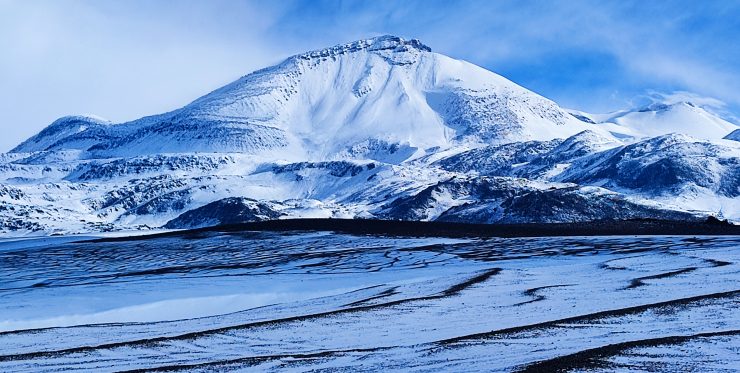
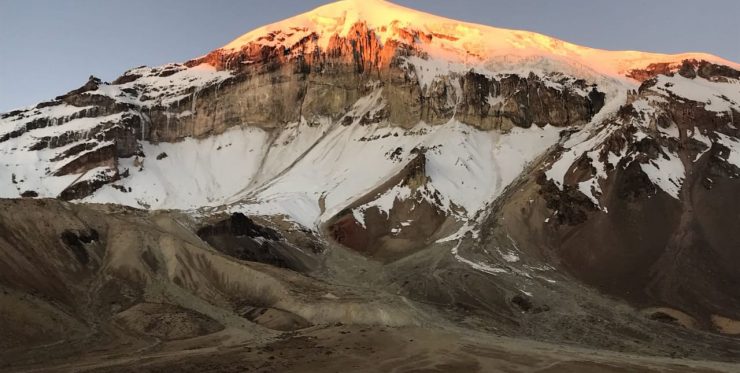
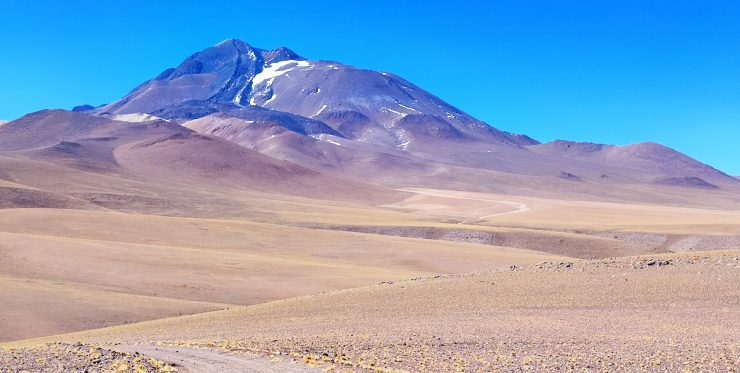
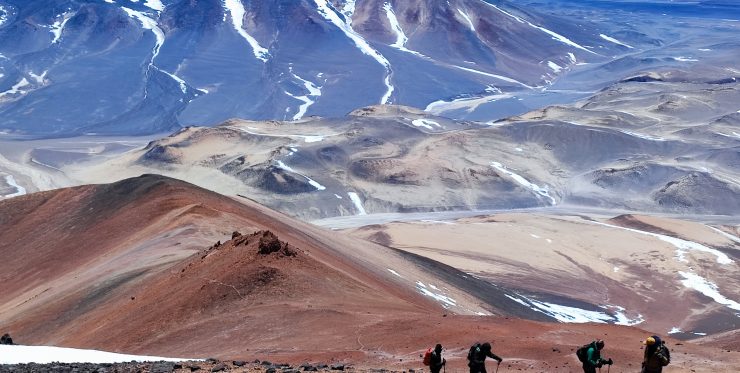
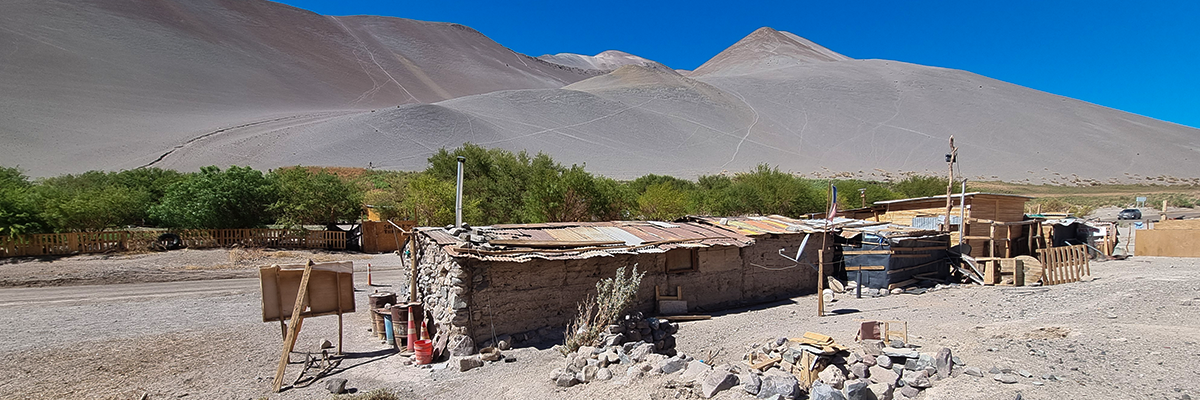
Geographically, Don Juan Camp is located at a key point on the ascent to the Altiplano. Nestled in a ravine protected from dominant winds, it offers a vital microclimate for the first phase of acclimatization.
Stopping here is a strategic decision. It allows us to expose the body to extreme aridity and moderate altitude in a safe environment before facing camps above 4,000 meters. This pause is fundamental for a progressive and solid physiological adaptation.
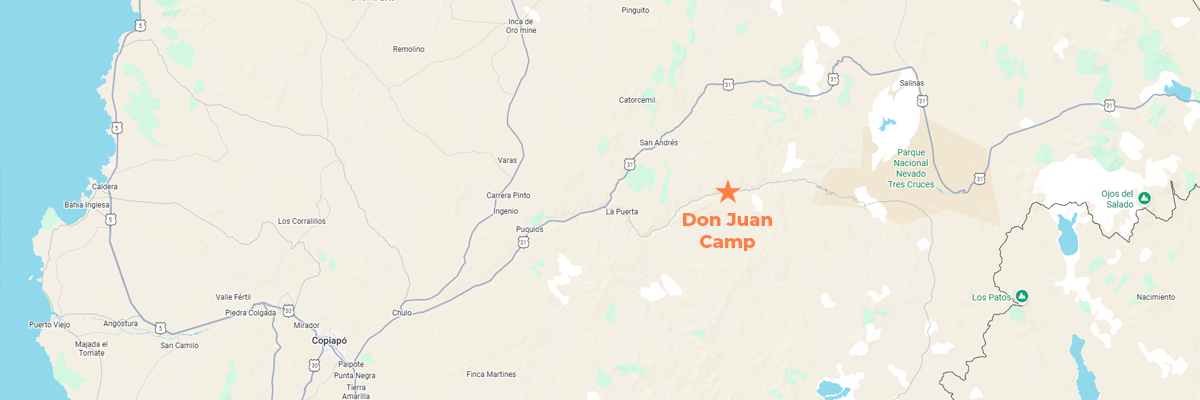
Strategic location of the Don Juan sector in the Atacama Region.
Centuries of Resilience and Andean Cosmovision
The true value of this place transcends logistics. The Atacama Desert is the ancestral territory of the Colla culture. Their history is marked by movement; in fact, during the 15th and 16th centuries, these people constantly moved between both sides of the mountain range. They have demonstrated an immense capacity for survival, resisting environmental impacts that began in 1894 with mining in Potrerillos, and restrictive measures in 1973 that severely affected their livestock and mining economy.
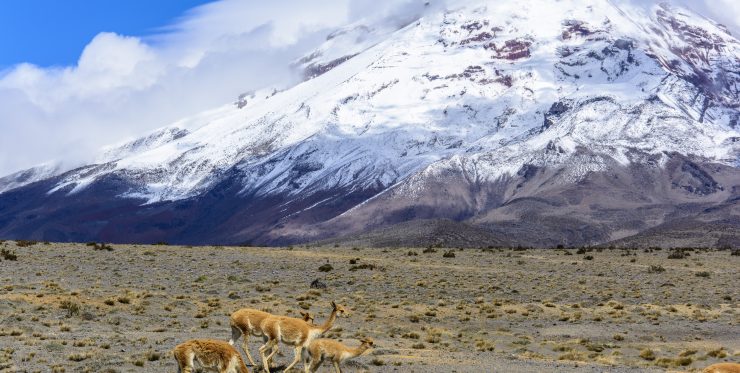
Their strength to inhabit this hostile environment comes from a cosmovision deeply linked to the Andean world. For the Colla, Pachamama (Mother Earth) plays a central and integrating role for all energies. Their respect for nature is reflected in the worship of celestial bodies like Tata Inti (Sun) and Mama Luna (Moon). Furthermore, they believe in protective spirits like the Yastai, the good spirit of the mountain often visualized as a large white guanaco. Consequently, it is common to find apachetas on mountain trails—stone mounds where travelers leave offerings seeking protection for their journey.
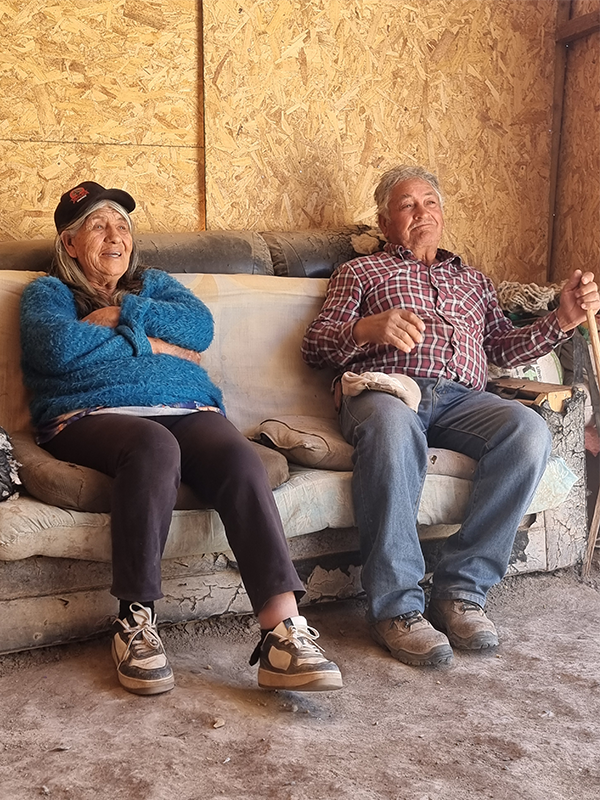
Don Juan and Doña Tomasa: The soul of the aillu in the Puna.
Hospitality and Gastronomy in the Aillu
In the current harshness of the Puna, Don Juan Camp is the home of Don Juan and Doña Tomasa. They are the pillar of their aillu, the traditional Andean word for family. Sharing time with them is a direct lesson in adaptation. This adaptability is also reflected in their gastronomy, historically based on meats and grains, designed for survival and constant travel.
The HME Seal: Ethical and Respectful Logistics
For High Mountain Expeditions (HME), integrating Don Juan Camp into our logistics is a statement of principles. A professional expedition recognizes and values local communities. Operating ethically in high mountains means:
Intelligent Acclimatization: Utilizing the protected geography of the sector for a more natural and safer physiological process.
Direct Economic Impact: Fostering local development by interacting and directly supporting those who have cared for these corners for generations.
Human Perspective: Providing an experience that contextualizes the sporting feat within the history and territory our clients step upon.
“Here we rest, share, and prepare the equipment before facing the great volcanoes. But, above all, we learn to respect the mountain through the eyes of its true inhabitants.”
Acclimatization is strategy, but it is also cultural immersion. If you are looking for an expedition that values the human environment as much as the technical challenge, this is the starting point.
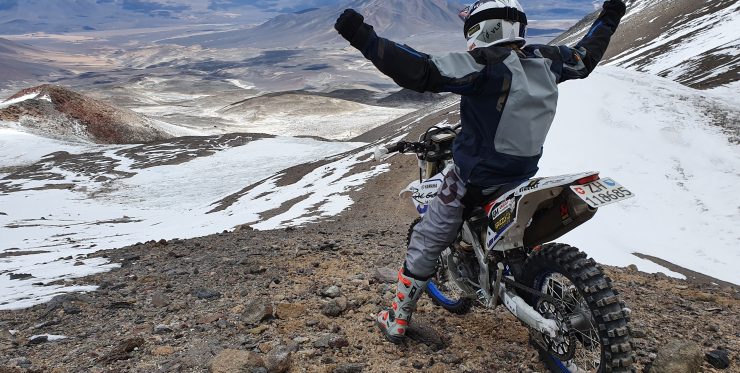
Expeditions visiting Don Juan: Ojos del Salado, Atacama Acclimatization Programs.
Looking for a purposeful expedition?
Explore our full itineraries and experience the high mountains with a deep sense of respect and local connection.